How to Choose the Best Pressure Car Wash Machine
Choosing a Pressure Car Wash Machine is not simply a matter of picking the model with the highest pressure rating. The right choice depends on what you clean, how often you use it, and where you can safely store it. A homeowner washing a sedan and patio may need a different setup from a small detailing business handling several vehicles each day. Small details matter. Hose length, nozzle options, water flow, and power supply all affect the experience.
Start by matching the machine’s pressure and flow rate to the surfaces you plan to wash. Paint, tires, wheels, and concrete do not all tolerate the same treatment. A variable nozzle and adjustable pressure can help you work carefully around trim, decals, and older paint. Read the manufacturer’s instructions before use, and test an inconspicuous area when you are unsure. More pressure is not always better. A powerful stream used too close can damage finishes or force water into sensitive areas.
Consider practical features, too: a stable frame, accessible controls, easy-to-connect fittings, and a hose that reaches around your vehicle without constant repositioning. Check the warranty, service support, and availability of replacement parts rather than relying on a sales claim alone. For frequent use, durability may matter more than a low purchase price. For occasional washing, a simpler machine could be enough. There is no perfect choice for everyone, and product specifications can be hard to compare. This guide explains the key factors so you can make a reasoned decision—and reconsider it if your needs change.
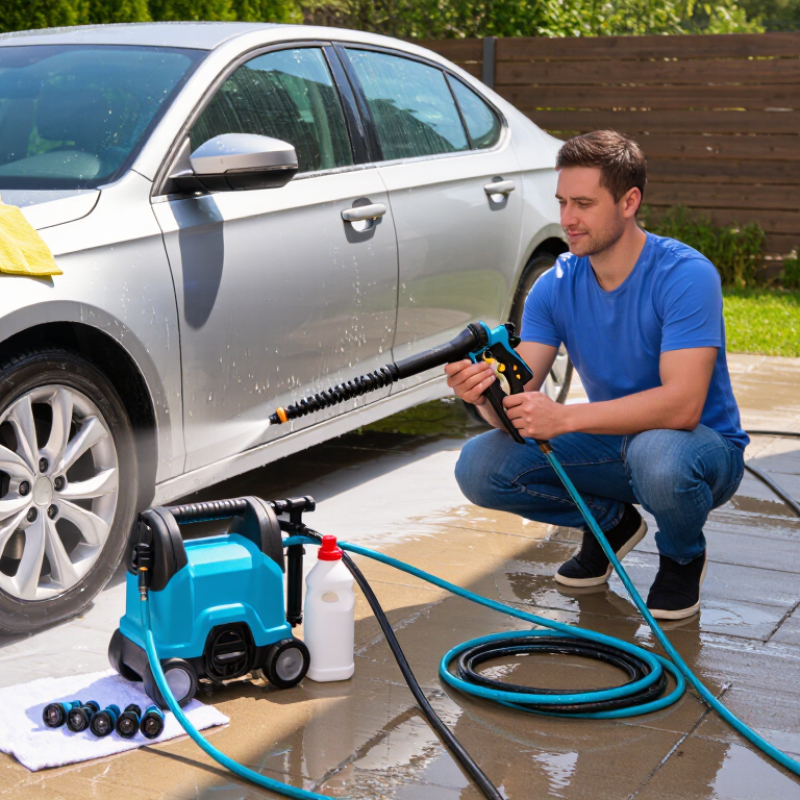
Identify Your Car-Washing Needs and Typical Cleaning Tasks
Before comparing pressure car wash machines, describe the jobs they must handle. A compact car washed weekly needs less cleaning power than a muddy SUV, a work van, or several vehicles cleaned in one afternoon. Note how often you wash, where you work, and whether you can access a suitable water supply. Small details matter. A long hose can make a cramped driveway easier to manage, while a heavy unit may be awkward to move around parked cars.
List the surfaces and dirt you encounter. Road dust, dried mud, and salt residue call for different approaches. Delicate paint, trim, wheels, and rubber seals also need careful handling. Higher pressure is not automatically better; a narrow spray held close can damage paint or force water into sensitive areas. Test a wider spray at a safe distance, then adjust gradually. Check the machine’s instructions for recommended settings and accessories.
Think about your actual routine, not an ideal one. If you only clean one car, a large unit may take up space without saving much time. If you wash several vehicles, hose length, storage, and duty-cycle guidance become more important. I once underestimated setup time; the cleaning itself was not the slow part. That is worth considering. Record your typical vehicle size, mess, and washing frequency before choosing a machine.
Understand Pressure, Water Flow, and Motor Specifications
When choosing a pressure car wash machine, compare working pressure and water flow together. Pressure, measured in PSI, helps loosen grime; flow, measured in gallons per minute, carries it away. A high PSI figure alone can look impressive but may produce slow rinsing. Check rated operating pressure, not just a brief peak value. Numbers matter.
For a car, moderate pressure and a fan-shaped nozzle usually offer better control around paint, badges, and rubber seals. A narrow jet can damage delicate surfaces if held close. Flow also affects practical washing time: a machine delivering 1.5 gallons per minute uses less water per minute than one delivering 2.5, but may rinse large panels more slowly. Test the distance and spray pattern on a less visible area.
Motor details matter during longer cleaning sessions. Check the machine’s rated input power, duty-cycle guidance, and thermal protection; a larger wattage figure does not guarantee stronger cleaning. The U.S. Department of Energy’s 2021 United States Industrial and Commercial Motor System Market Assessment Report estimates that motor systems account for about 69% of U.S. manufacturing electricity use, underscoring why motor efficiency deserves attention. That figure covers industrial systems, not car washers specifically. A product sheet can still leave questions, so compare pressure and flow under normal operation, plus the motor’s stated continuous-use limits.
Choose a Suitable Power Source, Size, and Portability
Before comparing pressure ratings, decide where the washer will work. An electric model suits many home driveways and patios, especially when an outlet is nearby. It is often quieter and needs less engine maintenance, but its cord can restrict movement. Keep electrical connections away from standing water and follow the manual’s instructions. A gas-powered model may suit larger properties without convenient power access. It is typically heavier and louder, and produces exhaust, so operate it outdoors. Think about storage, too. Garage space disappears fast.
Match the machine’s size and output to the jobs you actually do. A compact unit is easier to carry up steps and store on a shelf, but may take longer on broad paved areas. Larger models can cover ground faster, though their weight matters when loading them into a vehicle. Check the listed weight, handle position, wheel size, and hose length—not just the product dimensions. Small details count. A long hose can save repeated repositioning; oversized wheels may help on gravel but add bulk. There is no perfect balance, and a lighter machine may still feel awkward when its hose catches on a gate.
Compare Nozzles, Detergent Systems, and Useful Accessories
A pressure washer’s nozzle changes how its force reaches a surface. A wide-angle nozzle spreads water across patio stone, while a narrower spray removes stubborn grime from durable concrete. Keep the spray moving. Test it on a hidden spot before cleaning painted wood, vehicle trim, or older masonry. A tight spray can leave marks surprisingly fast. Match the nozzle to the surface, not just the dirt.
Detergent systems vary in how they draw and dilute cleaning solution. Check the machine’s instructions for compatible detergents and the correct application method. Some systems apply soap at low pressure, then switch back to a stronger rinse. That works well on muddy siding or greasy outdoor furniture, but detergent needs time to loosen soil. It should not dry on the surface. I used to think more foam meant better cleaning; that assumption is not always right. Rinsing thoroughly matters more.
Useful accessories can make routine jobs easier. A longer hose reduces how often the machine needs moving, and an inlet filter helps catch grit before it enters the pump. A surface-cleaner attachment can produce more even results on broad, flat areas than a handheld spray alone. Check that accessories fit the machine’s connections and pressure range. Small details count. A convenient tool is less useful if it strains the pump or leaves uneven cleaning marks.
Check Safety Features, Maintenance Needs, and Operating Costs
A pressure car wash machine is not just a contest of maximum pressure. Check for a secure trigger lock, a stable frame, and a hose rated for the machine’s working pressure. Electric models should have appropriate ground-fault protection, while hot-water units need clear temperature controls. Keep the nozzle pointed away from people, tires, and delicate trim; even a short spray at close range can cause damage. Small details matter.
Maintenance affects both reliability and safety. Look for accessible filters, fittings, and service points, then check the manual for pump-fluid requirements and recommended intervals. Before each use, inspect the hose for cracks and confirm that connections do not leak. After washing, release pressure and drain water as directed. In cold weather, trapped water can freeze and damage internal parts. I would not assume every machine needs the same routine; designs differ.
Estimate operating costs beyond the purchase price. Water use, electricity or fuel, detergent, replacement nozzles, and downtime all contribute. Compare the machine’s flow rate with the work you actually do: a higher flow may rinse faster, but it can also consume more water. A lower-cost unit may be sensible for occasional washing, though frequent repairs can erase the savings. Keep a simple record of detergent use and service visits. It may be imperfect, but it gives you a clearer picture of real costs.