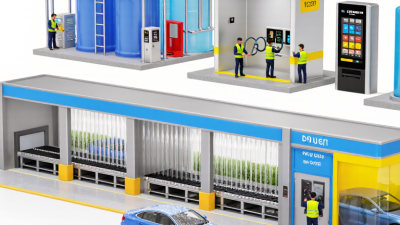
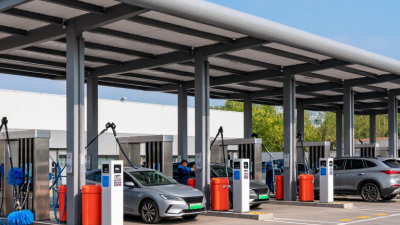
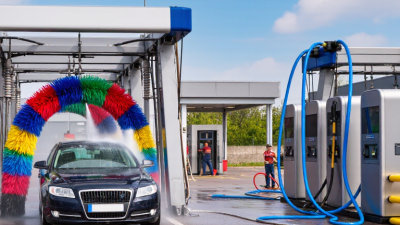
Choosing among the 2026 top automated car wash machines for sale means looking beyond glossy demonstrations. An Automated Car Wash system must fit the site, customer volume, water supply, and staffing plan. A compact in-bay unit may suit a limited footprint. A tunnel system can serve more vehicles, but needs more space and careful planning. The choice is practical.
Industry reports provide useful context, but their limits matter. The U.S. Census Bureau’s County Business Patterns data for NAICS 811192 tracks car-wash establishments and employment; it does not rate individual machines. The International Carwash Association’s consumer research offers another lens, highlighting what customers value in professional washes. Together, these sources help frame demand and service expectations, not prove that one model performs best. A ranking can still oversimplify.
This guide compares machine types and purchase considerations, including throughput, wash options, water reuse, maintenance access, and support availability. Buyers should check published specifications against local operating conditions, then ask vendors for reference sites and service details. A fast cycle sounds attractive. But cycle time alone says little about consistent cleaning, downtime, or total operating cost. Reported figures may also come from different test conditions, so compare them cautiously. The right system is the one that fits the business and can be maintained reliably—not necessarily the most expensive or feature-heavy option.
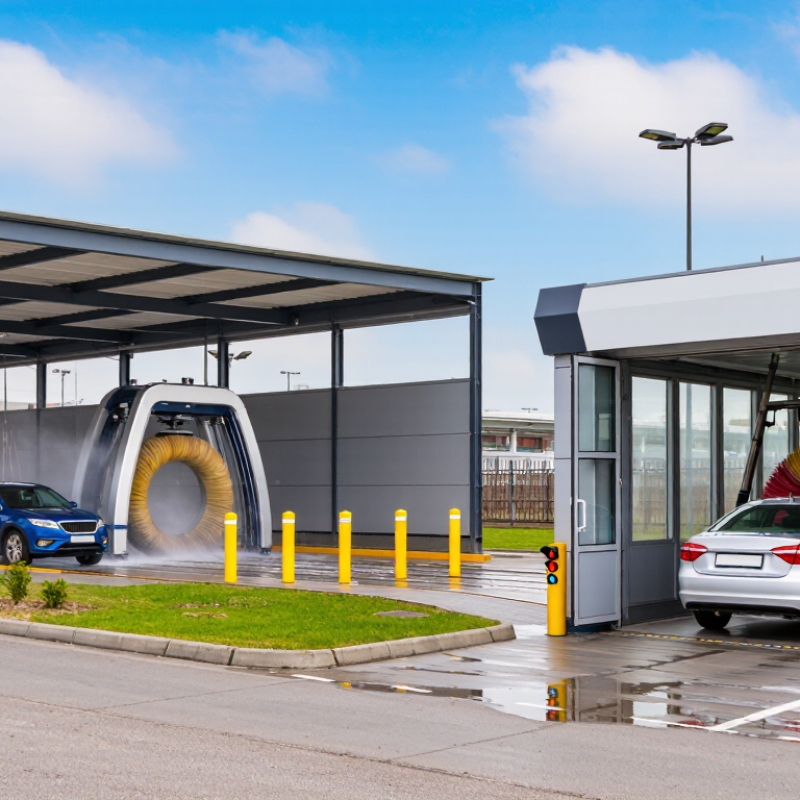
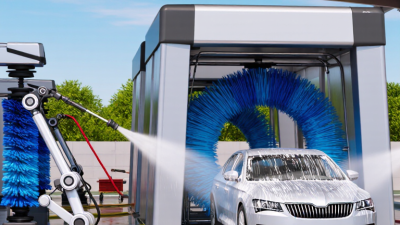
An automated car wash machine cleans vehicles through a programmed sequence of water, cleaning products, mechanical action, and drying. Unlike a hand wash, it controls timing and movement with sensors and a central system. The exact setup varies by machine type. In a rollover wash, the vehicle stays still while a frame moves around it. In a conveyor tunnel, the vehicle moves through several wash stations. Sensors help detect its position and guide equipment clearance. The controller then coordinates pumps, arches, brushes, and dryers. That matters.
Some machines use soft cloth or brushes to loosen road film. Others rely on directed water and detergent, with little or no contact. Neither method removes every mark in every condition. Mud packed around wheel wells, for example, may need extra attention. In a tunnel, separate stations can apply detergent, rinse the body, and blow water from mirrors and windows. Operators must keep filters, nozzles, and moving parts clean; a blocked nozzle can leave a visible strip. Automation makes the sequence more consistent, but it does not remove the need for maintenance or sensible setup. The process sounds tidy; real sites are less tidy. Not every time. When comparing machines for sale, check their vehicle-size limits, water requirements, wash options, and service access before focusing on speed.
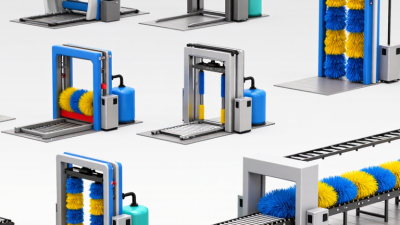
In 2026, automated car wash systems generally fall into four categories: conveyor tunnels, in-bay automatics, touchless units, and hybrid systems. Tunnel machines move vehicles along a conveyor past arches, brushes, and dryers. They suit sites expecting steady traffic and need space for queues. In-bay systems keep the car stationary while equipment travels around it. They can fit smaller sites, though each wash takes longer. A 2023 Grand View Research report valued the global car wash service market at $34.96 billion and forecast 5.6% annual growth from 2024 to 2030. That points to continued investment, but local demand matters more than a global forecast.
Touchless systems clean with high-pressure water and detergents rather than contacting the paint. They may appeal to drivers concerned about surface marks, but heavy soil can remain. Hybrid machines combine touch-free prewashing with soft-cloth contact. The result depends on wash chemistry, maintenance, and how well the equipment is adjusted. Small details count. A blocked nozzle can leave streaks.
For buyers comparing machines for sale, match the system to site layout, water recovery capacity, staffing, and peak-hour traffic. Ask suppliers for measured cycle times and utility use under comparable conditions. A fast advertised cycle may exclude drying or payment delays. There is no perfect type. Even a well-designed system can underperform when upkeep slips.
Modern automated car wash machines combine mechanical, hydraulic, and control systems. The wash frame or conveyor guides each vehicle through a repeatable cleaning path. Photoelectric sensors help detect vehicle position and shape, while programmable controls adjust equipment timing. Sensors need regular cleaning; a dusty lens can interrupt a cycle.
Pumps deliver water and detergent through arches, spray bars, and targeted nozzles. Their placement affects coverage, especially around mirrors, wheel wells, and lower panels. Soft cloth or foam brushes provide physical contact, while touch-free systems rely more heavily on water pressure and chemistry. Neither approach suits every site. Water hardness, local climate, and customer expectations all matter.
Dryers use high-volume airflow to remove water from glass and body panels. Some systems also include filtration and water-recovery equipment, which can reduce fresh-water demand when properly maintained. Check access to service points, spare parts, and clear fault displays before buying. These details matter. A fast machine can still become a costly bottleneck if routine maintenance is difficult. Compare expected vehicles per hour with actual peak demand, not just the advertised maximum. That estimate is easy to get wrong.
How to Compare Automated Car Wash Machines for Sale
Comparing automated car wash machines starts with the site, not the sales brochure. Measure usable bay length, ceiling height, entry clearance, and vehicle queue space. Then compare rated cars per hour with your busiest hour, not your daily average. A faster cycle may still create a bottleneck if drying, payment, or vehicle loading takes longer. Small details matter.
Check operating costs alongside purchase price. The International Carwash Association’s published water-use comparisons report roughly 38 gallons per vehicle for an in-bay automatic wash, compared with 80–140 gallons for washing at home. Treat that as a benchmark, not a guarantee: water reclaim, local conditions, and wash settings change actual consumption. Ask sellers for measured water and energy use per cycle, plus maintenance schedules and parts availability. A reclaim system can lower fresh-water demand, but filters and tanks need regular attention.
Test vehicle fit and cleaning consistency before choosing. Request demonstrations using common local vehicles, including taller SUVs, and inspect wheel, rocker-panel, and rear-window coverage. Review safety sensors, emergency stops, payment options, and remote fault alerts. Ask for service-response times in writing. Uptime matters. One overlooked issue is drying: stronger airflow may improve results, yet increase energy use and noise. Compare warranty exclusions and installation costs carefully; these are easy to underestimate.
| Machine Type | Typical Throughput | Typical Wash Cycle | Space and Building Needs | Best Suited For | Key Advantages | Points to Compare Before Buying |
|---|---|---|---|---|---|---|
| In-bay automatic, touchless | About 8–15 vehicles per hour, depending on cycle length and site flow | Approximately 4–8 minutes per vehicle | One wash bay; the vehicle remains stationary while equipment moves around it. Confirm the equipment’s required bay length, width, and height. | Fuel stations, convenience stores, and smaller sites that need an automated option with a relatively compact layout | No brushes or cloth contact the vehicle; can suit customers who prefer a touchless wash | Compare cleaning performance, chemical and water requirements, drying capability, vehicle-clearance limits, and the availability of local service |
| In-bay automatic, friction | About 8–15 vehicles per hour, depending on cycle length and site flow | Approximately 4–7 minutes per vehicle | One wash bay with space for the vehicle and moving wash equipment. Exact dimensions depend on the machine configuration. | Sites seeking automated washing with brush or cloth contact and a moderate daily vehicle volume | Provides direct surface contact, which may help remove adhered dirt when equipment and materials are properly maintained | Check brush or cloth material, maintenance intervals, vehicle-detection features, wash-package options, and clearance requirements |
| Conveyor tunnel, express exterior | Commonly about 60–160 vehicles per hour; actual capacity depends on conveyor speed, spacing, and operating conditions | Typically a few minutes on the conveyor, in addition to queueing and loading time | Requires a tunnel and vehicle queue lanes. A tunnel may be roughly 100–250 feet long, but the full site needs additional room for loading, queuing, and drying. | High-volume locations designed for fast exterior washes and repeat customer traffic | High potential throughput; multiple wash steps can be arranged in sequence | Compare rated capacity, conveyor speed, tunnel layout, loading method, staffing needs, water-reclaim setup, and the cost of site preparation |
| Conveyor tunnel, full-service configuration | Often about 30–100 vehicles per hour, with throughput affected by service selection and interior-cleaning workflow | Exterior tunnel time is only part of the total visit; interior services can add substantial time | Requires a conveyor tunnel plus room for vehicle staging and, where offered, interior-cleaning areas | Operators offering exterior washing alongside interior cleaning or other attended services | Can support a wider range of services and wash packages | Assess labor and staffing plans, service-bay capacity, customer circulation, tunnel capacity, and how interior work affects total vehicle flow |
| Compact automatic wash system | Varies by design; commonly comparable to a single-bay automatic system rather than a conveyor tunnel | Depends on the selected wash program and equipment configuration | Designed for a restricted site, but still requires suitable vehicle access, drainage, utilities, and safe clearance around the equipment | Sites with limited available space or an existing bay that may be adaptable | May fit locations where a larger tunnel installation is impractical | Verify the complete installation dimensions, building and drainage compatibility, vehicle limits, service access, and actual capacity with the supplier |
Comparison note: Throughput, cycle time, and space figures are broad planning ranges, not guaranteed specifications. Actual performance and installation requirements vary by equipment design, wash package, site layout, local rules, and operating practices. Request current equipment drawings, utility requirements, and a site-specific capacity estimate before purchasing.
Choosing an automated wash system starts with the site, not the machine. Measure hourly demand, vehicle mix, queue space, and available utilities. A narrow lot may favor an in-bay automatic, while steady high traffic can justify a conveyor. Guessing here gets expensive.
Water use deserves close attention. The International Carwash Association’s Water Use Study reports that professional car washes use about 40 gallons of fresh water per vehicle on average. Ask suppliers for measured water use per cycle, reclaim capacity, and filtration requirements. Compare figures under similar wash programs; a quoted best-case number may not reflect a busy Tuesday.
Also check drying performance, chemical dosing controls, service access, and operator training. A system that cleans well but stops often can quietly erode revenue. Request maintenance intervals, parts availability, and a site-specific utility estimate before signing. And leave room for uncertainty: local water quality and winter grit can change wear patterns.
Tips: Run a timed demonstration with muddy vehicles. Track cycle time, water use, drying, and how easily staff can clear a fault. Then compare total operating costs, not just the purchase price.