Top 10 Self Wash Car Wash Equipment Suppliers in China
China has become a major manufacturing base for Self Wash Car Wash Equipment, serving operators across Asia, Europe, the Middle East, and North America. Its suppliers offer self-service bays, high-pressure pumps, foam brushes, vacuum stations, payment terminals, and water-recycling systems. The market is expanding, but equipment quality differs widely.
Grand View Research estimates that the global car wash services market was worth approximately USD 30 billion in 2023. It also forecasts steady growth through 2030, driven by urbanization, vehicle ownership, and consumer demand for convenient cleaning services. Fortune Business Insights reports similar momentum, although market definitions vary between professional washing, self-service operations, and equipment sales. That difference matters.
Eric Wulf, a former chief executive of the International Carwash Association, has emphasized, “Professional car washing is a water-quality solution, not just a convenience.” This principle applies directly to supplier selection. A reliable machine should deliver stable pressure, controlled chemical dosing, durable stainless-steel components, and practical wastewater management. A shiny catalog proves little.
This guide reviews ten Chinese suppliers from an operator’s perspective. It considers manufacturing experience, product range, export capability, certifications, technical support, spare-part access, and installation experience. Field details matter: frozen pipes, coin acceptors exposed to rain, noisy vacuum motors, and delayed replacement pumps can quickly damage profitability.
Some supplier claims still require verification. Factory visits, sample testing, and reference checks remain necessary. No ranking can remove every risk. However, careful comparison can help buyers identify dependable Self Wash Car Wash Equipment partners and avoid decisions based only on low prices.
Understanding Self-Wash Car Wash Equipment
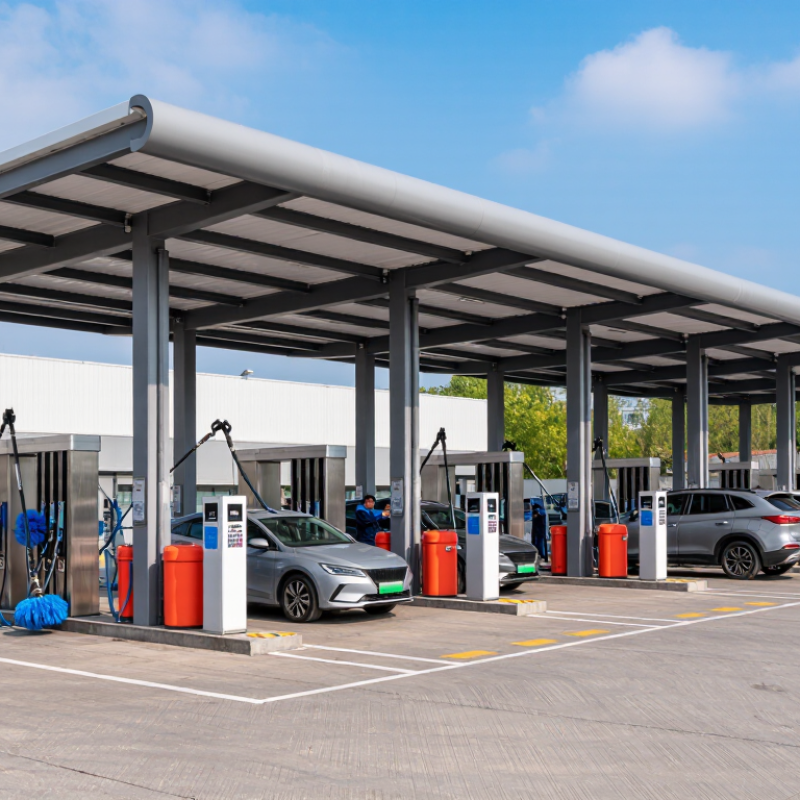
Understanding self-wash car wash equipment starts with water control, payment reliability, and daily maintenance. Grand View Research valued the global car wash services market at approximately USD 32.47 billion in 2023. It also projected a 6.1% compound annual growth rate from 2024 to 2030. This growth increases demand for practical, durable self-wash systems, not merely attractive equipment catalogs.
A well-designed bay usually includes a high-pressure pump, foam brush, spot-free rinse, vacuum station, timer, and cashless payment terminal. International Carwash Association research indicates that self-service washing can use about 12 gallons of water per vehicle, depending on equipment and user behavior. Water reclaim systems may reduce fresh-water demand further. However, suppliers should provide verified recovery rates, not vague sustainability claims. Check pump pressure, nozzle flow, hose flexibility, freeze protection, and emergency shutoff functions. Small details matter.
Supplier evaluation also requires service evidence. Ask for spare-parts availability, response times, installation drawings, and maintenance records from comparable sites. Stainless steel panels can resist corrosion, but poor drainage still creates trouble. A cheaper system may become expensive after repeated pump failures. That lesson is easy to miss. Energy use, local water quality, winter temperatures, and customer traffic should shape the final specification. No single package fits every site, and even experienced buyers can underestimate cleaning labor.
| Reference Profile | Equipment Configuration | Recommended Bays | Working Pressure | Water Flow | Pump Motor | Maximum Vehicle Height | Water-Saving Options | Electrical Supply | Typical Applications |
|---|---|---|---|---|---|---|---|---|---|
| Profile 01 | Single-bay self-service wash system | 1–2 bays | 70–100 bar | 10–15 L/min | 4–5.5 kW | 2.2 m | Foam control, low-flow nozzle | 380 V / 3 Ph / 50 Hz | Small petrol stations and residential sites |
| Profile 02 | Two-bay high-pressure wash package | 2–4 bays | 80–120 bar | 12–16 L/min | 5.5–7.5 kW | 2.4 m | Reclaim tank, sediment filtration | 380 V / 3 Ph / 50 Hz | Commercial roadside wash facilities |
| Profile 03 | Modular self-wash cabinet system | 1–6 bays | 75–110 bar | 10–14 L/min | 4–7.5 kW | 2.3 m | Water recycling, dosing control | 220/380 V / 50 Hz | Compact urban wash locations |
| Profile 04 | Self-service wash and vacuum station | 2–8 bays | 80–100 bar | 11–15 L/min | 5.5 kW | 2.4 m | Vacuum recovery, water filtration | 380 V / 3 Ph / 50 Hz | Shopping centers and fleet depots |
| Profile 05 | Cold-water high-pressure wash unit | 1–4 bays | 90–130 bar | 12–18 L/min | 5.5–7.5 kW | 2.5 m | Adjustable pressure, rinse timer | 380 V / 3 Ph / 50 Hz | High-volume public wash sites |
| Profile 06 | Hot-water self-service wash system | 2–6 bays | 80–120 bar | 10–15 L/min | 6–9 kW | 2.4 m | Detergent metering, reclaim system | 380 V / 3 Ph / 50 Hz | Cold-weather and heavy-soil applications |
| Profile 07 | Automatic payment self-wash station | 2–10 bays | 70–110 bar | 10–16 L/min | 4–7.5 kW | 2.3 m | Coin, card, QR payment integration | 220/380 V / 50 Hz | Unattended and extended-hour facilities |
| Profile 08 | Containerized self-wash equipment package | 2–6 bays | 80–120 bar | 12–16 L/min | 5.5–7.5 kW | 2.5 m | 1,000–3,000 L storage and reclaim tanks | 380 V / 3 Ph / 50 Hz | Temporary, remote, and modular sites |
| Profile 09 | Multi-function wash, foam, and wax system | 2–8 bays | 75–115 bar | 10–15 L/min | 5.5 kW | 2.4 m | Foam dosing, wax dosing, spot-free rinse | 380 V / 3 Ph / 50 Hz | Premium self-service wash centers |
| Profile 10 | Integrated self-wash and wastewater-treatment system | 4–12 bays | 80–120 bar | 12–18 L/min | 7.5–11 kW | 2.6 m | Oil separation, sediment filtration, water reclaim | 380 V / 3 Ph / 50 Hz | Large commercial and fleet-washing projects |
Related Posts
-

China Top 10 Self Car Wash Machine Manufacturers?
-
What Is a Fully Automated Car Wash?
-
How to Choose the Best Self Car Wash Equipment?
-
How to Enhance Customer Experience with Automated Car Wash Technology
-
Top 10 Benefits of Using Industrial Car Wash Machine?
-
2026 Best Fully Automated Car Wash Solutions for Your Business