How to Choose Automatic Carwash Equipment?
Choosing Automatic Carwash Equipment is a practical business decision, not a simple shopping exercise. The right system must match vehicle volume, site dimensions, water conditions, labor capacity, and customer expectations. A compact express tunnel may suit a busy roadside location. A rollover system may work better where space and daily traffic are limited. The equipment should also fit the building, drainage layout, electrical supply, and maintenance plan.
Eric Wulf, former CEO of the International Carwash Association, has emphasized, “A car wash is a service business.” That view matters. Customers remember drying quality, queue time, noise, payment convenience, and visible cleanliness. They rarely judge equipment by its price alone. Reliable suppliers should provide installation guidance, operator training, safety documentation, spare-parts access, and measurable performance data. Ask for service records from comparable sites. Visit a working wash if possible. A polished showroom demonstration is not enough.
Water recycling, sensor accuracy, brush material, conveyor design, chemical control, and dryer performance deserve close attention. Equipment that saves labor may increase repair costs. A cheaper unit may consume more water or create longer queues. These trade-offs are easy to underestimate. No machine is perfect. That is worth admitting. Before choosing, calculate expected cars per hour, revenue per vehicle, utility use, downtime risk, and long-term maintenance costs. Speak with experienced operators, not only sales representatives. A thoughtful decision leaves room for seasonal demand, equipment upgrades, and mistakes. The best Automatic Carwash Equipment is not necessarily the fastest or most expensive. It is the system that performs consistently, protects vehicles, and supports a dependable customer experience.
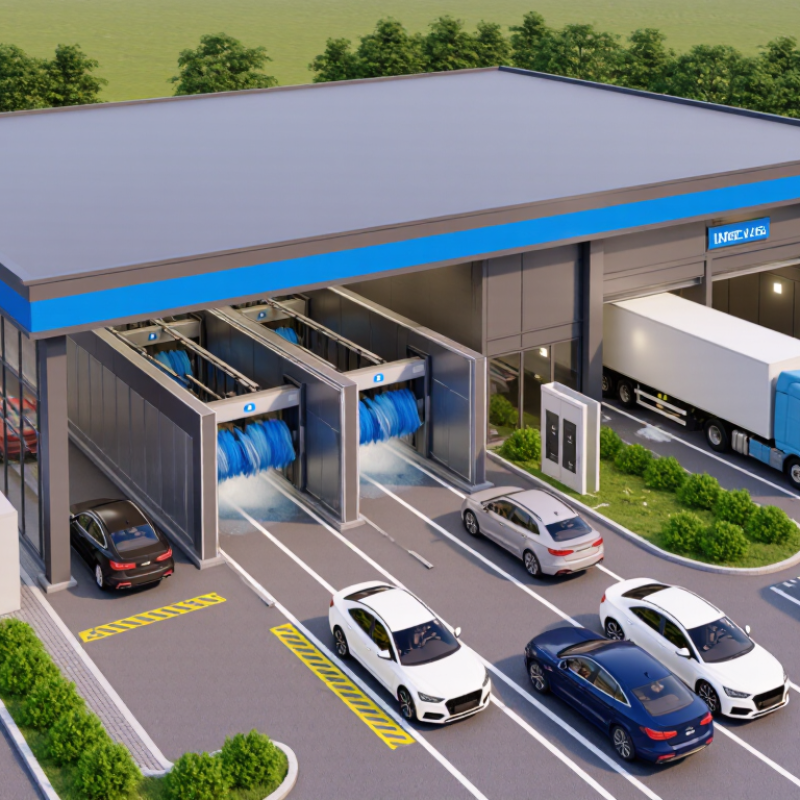
Define Your Carwash Site, Customers, and Service Requirements
Choosing automatic carwash equipment starts with the site, not the machine. Measure traffic flow, driveway width, drainage, utility capacity, and peak-hour vehicle queues. A narrow entrance may create delays, even with fast equipment. The International Carwash Association’s 2024 Consumer Study indicates that convenience strongly influences professional wash decisions. Your layout must make entry, payment, washing, and exit feel simple.
Define your customers more precisely. Commuters often value speed and predictable pricing. Families may prefer gentle washing and interior-cleaning options. Fleet operators usually need repeatable results and service records. Review local vehicle sizes, seasonal weather, and average daily traffic before selecting tunnel length or bay configuration. Do not rely on guesswork. A short observation period can reveal more than a supplier’s sales projection.
Service requirements should guide every technical choice. Determine whether you need basic washing, drying, underbody cleaning, waxing, or water-recovery functions. The International Carwash Association’s water-use research shows that professional facilities can significantly reduce freshwater demand through efficient systems and reclaim practices. Still, savings depend on maintenance and site conditions. A poorly maintained recovery system may affect water quality and wash performance. I have found that equipment plans often look perfect on paper, yet ignore staff training, spare parts, and winter conditions. That is the uncomfortable gap. Plan for it.
How to Choose Automatic Carwash Equipment? - Define Your Carwash Site, Customers, and Service Requirements
| Planning Dimension | Key Requirement to Define | Typical Planning Benchmark | Suitable Automatic Equipment Direction | Selection Implication |
|---|---|---|---|---|
| Site Type | Available land, entrance layout, exit route, and vehicle circulation | A compact in-bay site generally requires less space than a conveyor-based tunnel. The final footprint must include queue lanes, equipment rooms, drainage, and safe pedestrian clearance. | In-bay automatic system for compact sites; conveyor tunnel system for larger sites with continuous vehicle flow | Match the machine footprint to the complete site plan, not only the wash building. |
| Customer Profile | Private motorists, fleet operators, commuters, premium customers, or mixed users | Private motorists commonly value convenience and predictable pricing. Fleet customers usually prioritize throughput, repeatability, and operating availability. | Programmable automatic wash equipment with selectable packages and account or fleet controls where required | Choose features based on customer behavior rather than maximum technical specifications. |
| Traffic Volume | Expected vehicles per hour and peak demand periods | A single in-bay automatic bay is normally suited to lower or moderate hourly demand. Conveyor systems are generally considered when demand is consistently high and queuing must be minimized. | In-bay automatic for moderate volume; conveyor tunnel with multiple finishing stations for high volume | Size the system for peak periods while avoiding excessive idle capacity during normal hours. |
| Service Mix | Basic exterior wash, premium wash, underbody cleaning, wheel cleaning, drying, waxing, or interior service | Exterior-only programs need less equipment and labor. Additional chemical applications, wheel treatment, underbody wash, and drying stages increase system complexity. | Select equipment modules that support the planned wash menu, including high-pressure arches, foam applicators, dryers, and underbody units | Do not pay for modules that cannot be monetized through the intended service menu. |
| Vehicle Throughput | Target wash time and acceptable queue length | An in-bay cycle commonly takes several minutes, depending on the selected program. Conveyor throughput depends on conveyor speed, vehicle spacing, wash stages, and loading efficiency. | Use programmable cycle controls for in-bay sites; use conveyor speed control and coordinated treatment stations for tunnel sites | Compare rated capacity with real operating capacity, including loading, payment, and drying time. |
| Water Supply | Available flow, water pressure, drainage capacity, and local discharge rules | Automatic wash systems require adequate water supply and drainage. Water consumption varies substantially by equipment design, wash program, pressure settings, and reclaim percentage. | Equipment with water reclaim, filtration, low-flow nozzles, and programmable water management where local regulations and site economics support them | Verify hydraulic capacity before selecting high-throughput equipment. |
| Electrical and Utility Capacity | Electrical service, voltage, compressed air, heating, lighting, and winter protection | Pump motors, dryers, controls, heaters, and water-treatment equipment can create significant peak loads. Cold climates may also require freeze protection and heated plumbing. | Specify equipment voltage, motor loads, heater requirements, control panels, and freeze-protection options during site design | Confirm utility capacity with a qualified electrical and mechanical professional. |
| Building and Bay Dimensions | Vehicle length, width, height, clearance, and equipment access | The usable bay must accommodate the largest intended vehicle, mirrors, roof accessories, safety clearance, doors, dryers, and maintenance access. | Choose equipment with dimensions and sensors suitable for the local vehicle mix, including SUVs, vans, and pickup trucks if accepted | Set vehicle acceptance limits clearly and display them before the wash entry. |
| Labor Model | Staffed, partially staffed, or unattended operation | Automatic systems reduce repetitive washing labor but still require inspection, cleaning, chemical replenishment, payment support, and preventive maintenance. | Remote monitoring, automated payment, fault alerts, and chemical-level monitoring for lower-touch operations | Automation reduces routine labor; it does not eliminate operational responsibility. |
| Payment and Access | Pay station, point-of-sale system, mobile payment, membership, prepaid account, or fleet access | Payment options should support the target customer base and remain usable during peak traffic. Membership programs require reliable customer identification and transaction records. | Integrated pay stations, card readers, receipt systems, membership validation, and fleet account controls where needed | Select an open, supportable payment architecture that can scale with the business. |
| Chemical Program | Detergent, presoak, foam, wax, drying aid, and water-treatment requirements | Chemical consumption depends on water quality, vehicle soil level, dosage settings, wash frequency, and program design. Incorrect dosing can reduce cleaning quality and increase discharge. | Accurate chemical dosing pumps, adjustable application controls, compatible storage, and clear chemical labeling | Evaluate chemical compatibility, dosing accuracy, storage safety, and total operating cost. |
| Drying Performance | Required finish quality, vehicle shape coverage, noise limits, and drying time | Drying results depend on air volume, nozzle position, vehicle speed, surface condition, and vehicle geometry. Large mirrors, roof racks, and rear contours can affect coverage. | Adjustable dryers with suitable air control, contour coverage, and programmable positioning | Test drying quality on the actual vehicle types expected at the site. |
| Maintenance and Reliability | Preventive maintenance schedule, spare parts, service access, and downtime tolerance | Brushes, belts, pumps, bearings, sensors, nozzles, dryers, and chemical lines require routine inspection and replacement according to usage and manufacturer guidance. | Modular components, diagnostic controls, accessible service areas, corrosion-resistant materials, and documented maintenance procedures | Consider lifecycle cost and service support, not only initial purchase price. |
| Safety and Compliance | Vehicle positioning, emergency stops, moving equipment protection, chemical handling, drainage, and local permits | Requirements vary by jurisdiction and may involve building, electrical, plumbing, environmental, accessibility, and occupational safety rules. | Vehicle sensors, emergency-stop circuits, warning indicators, guarded moving parts, spill controls, and compliant control systems | Obtain local approvals and conduct a formal risk assessment before operation. |
| Climate and Seasonality | Freezing temperatures, snow, dust, heat, humidity, and seasonal traffic changes | Cold weather can freeze exposed water lines and reduce chemical performance. Dust, sand, and road salt can increase cleaning demand and equipment wear. | Freeze protection, heated enclosures, weather-resistant controls, enhanced filtration, and corrosion-resistant components where appropriate | Select environmental options according to the site’s actual climate and operating season. |
| Total Cost of Ownership | Purchase, construction, installation, utilities, chemicals, labor, maintenance, water treatment, and downtime | The lowest equipment price may not produce the lowest operating cost. Energy, water, chemicals, service calls, replacement parts, and lost operating hours should be included in the financial model. | Compare equipment using expected cost per vehicle, planned utilization, service intervals, water strategy, and useful life | Approve equipment only after a complete lifecycle-cost comparison. |
Planning benchmarks are general industry guidance. Actual equipment capacity, utility demand, water consumption, site dimensions, permits, and operating costs must be verified through a site survey, local regulations, and the selected equipment's technical documentation.
Related Posts
-

China Top 10 Self Car Wash Machine Manufacturers?
-
Top 10 Self Wash Car Wash Equipment Suppliers in China
-

How to Choose the Best Car Wash Machine: 2025 Tech Trends Shaping the Industry
-
2026 Best Automatic Carwash Machine for Global Buyers?
-
How to Choose the Best High Pressure Car Wash Machine?
-
What Is a Fully Automated Car Wash?