How to Choose an Automated Truck Wash in 2026?

Choosing an Automated Truck Wash in 2026 is not simply a matter of comparing prices or wash times. A system must suit the trucks you actually operate, from day cabs to high-roof trailers. Measure vehicle height, width, and length before reviewing equipment specifications. A tight yard can turn a fast wash into a slow queue. That matters.

Compare the wash method, expected throughput, water use, and maintenance needs. Ask suppliers how the system handles mud, road salt, and varied vehicle shapes. Request a demonstration with a truck similar to yours, and watch for missed areas around mirrors, steps, and rear doors. Small details count. Check what water-recycling equipment is included, how filters are serviced, and which detergents the manufacturer recommends. These details affect daily costs and wash consistency, though actual results depend on soil, weather, and operating practices.

Reliability deserves as much attention as cleaning performance. Review service response times, spare-parts availability, operator training, and warranty terms. Calculate the full cost of ownership, including installation, utilities, labor, and planned maintenance—not only the purchase price. An Automated Truck Wash can improve fleet appearance and reduce manual washing demands, but it cannot correct poor site planning or neglected upkeep. Be skeptical of promises that sound universal. The right choice depends on your fleet, location, and wash schedule, and one assumption may need revisiting after real-world use. A careful comparison now can help prevent expensive surprises later.
How to Choose an Automated Truck Wash in 2026?

Understanding How Automated Truck Wash Systems Work

How to Choose an Automated Truck Wash in 2026?
Understanding How Automated Truck Wash Systems Work

An automated truck wash is a sequence of controlled steps, not just a row of spray arches. Sensors read a vehicle’s position and dimensions, then a controller starts the selected wash cycle. Pre-soak loosens road film; rotating brushes or high-pressure jets clean the cab, trailer, and wheels. A final rinse removes detergent, and optional dryers reduce standing water. Undercarriage coverage matters too, especially after winter routes. Still, sensors can miss unusual mirrors or attachments.

Water use deserves a close look. The U.S. Environmental Protection Agency’s WaterSense at Work guidance gives roughly 30–60 gallons per vehicle as a commercial car-wash benchmark. That figure is not a truck-wash guarantee: longer vehicles, heavier soil, and wash settings change demand. Ask suppliers for measured gallons per truck, cycle time, and reclaim performance under your fleet’s actual conditions. Check what filtration removes, how often filters need service, and whether the control system records wash cycles. A polished demo is useful, but operating data is better evidence.

Tips: Watch a full wash with a typical loaded truck. Check mirror clearance, wheel coverage, emergency stops, and runoff handling. Request a written test using your own vehicle dimensions. Reclaimed water can lower fresh-water demand, but poor maintenance may leave grit or residue. That trade-off deserves a real inspection.

Defining Your Fleet, Site, and Cleaning Requirements

An automated truck wash should fit the fleet you actually operate, not an idealized average vehicle. List tractor, trailer, rigid truck, and van dimensions, then note roof equipment, mirrors, wheelbases, and the dirtiest routes. Start with the trucks. Measure, don’t guess. A few centimetres of clearance can decide whether a system handles the whole fleet or sends certain vehicles elsewhere. Estimate peak arrivals by shift, too; daily totals alone can hide a queue of muddy trucks returning at once.

Site conditions shape the shortlist. Check approach and exit space, turning radius, bay length, drainage capacity, water supply, and winter freeze exposure.

The U.S. Environmental Protection Agency’s WaterSense at Work guide reports average use of about 42 gallons per vehicle for in-bay automatic washes and 85 gallons for conveyor systems. These are passenger-vehicle reference figures, not truck-wash design specifications.

Still, they show why water availability and reclaim performance deserve a place in the site assessment. Ask suppliers for measured water use per truck under your expected cycle, and verify what that figure includes. This part is easy to overlook. Cleaning needs matter just as much: road salt, oily film, and dried mud may require different detergents, spray angles, or cycle times. A wash that looks efficient on paper may miss chassis areas in practice, so test it against representative vehicles before committing.

Comparing Wash Technologies and System Configurations

How to Choose an Automated Truck Wash in 2026?

Comparing Wash Technologies and System Configurations

Automated truck washes generally use friction brushes, high-pressure touchless equipment, or a combination of both. Brushes physically remove road film and dried grime, but require suitable contact pressure and regular inspection. Touchless systems avoid brush contact and can suit vehicles with delicate fittings. Heavy mud may need extra time, detergent, or a pre-rinse. Hybrid systems combine methods, though added equipment can mean more maintenance points.

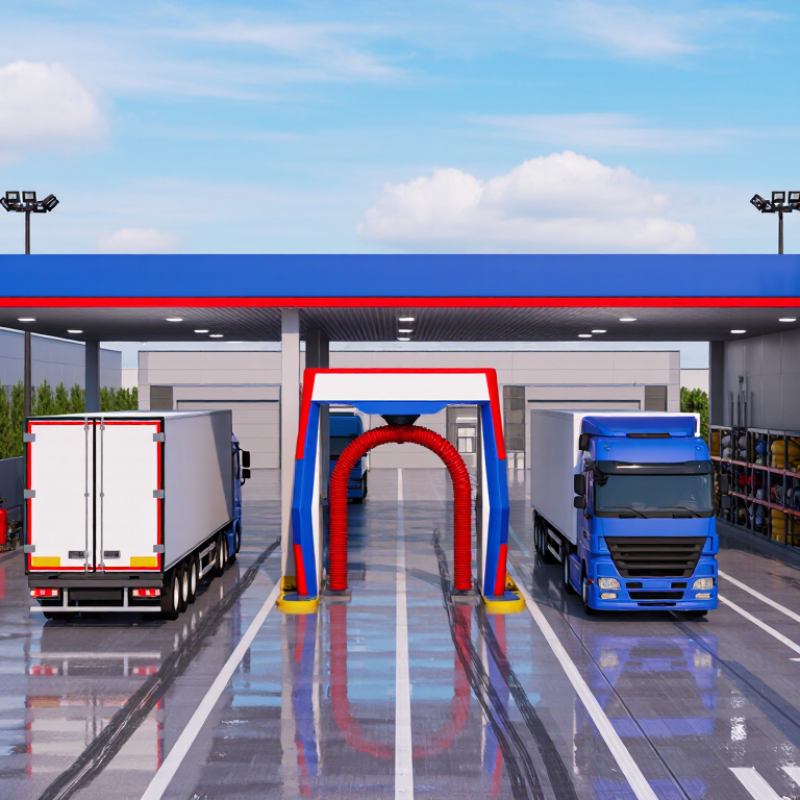
Configuration matters as much as wash technology. A rollover or gantry system moves around a stationary truck, making it useful where space is limited or vehicle types vary. A conveyor tunnel moves trucks through several wash stages and can serve steady, high-volume traffic. Check actual vehicle length, mirror width, and turning clearance—not just the site plan. A small measurement error can disrupt the whole lane.

Look beyond advertised cycle times. Ask operators to test the system with trucks carrying realistic road dirt, including grime around wheel arches and fuel tanks. A clean test truck can mislead. Compare water use, drainage, reclaim capacity, chemical handling, and access to service parts. Sensor performance deserves attention too: mud or spray can affect readings. It is easy to assume automation removes every inconsistency. It does not. A wash that fits your routes, staffing, and maintenance skills is usually the more dependable choice.

Evaluating Performance, Safety, Compliance, and Total Cost

Choose a wash by observing real operating conditions, not a polished demonstration. Time complete cycles during a busy shift, including queueing, repositioning, and rewash. Watch how brushes handle mirror housings, trailer seams, and heavy road film. A fast cycle is useful only if cleaning quality stays consistent. That matters.

Safety and compliance deserve equal scrutiny. Check emergency stops, guarding, slip-resistant floors, chemical handling procedures, and documented operator training. Confirm that the system’s wastewater controls meet local discharge requirements. Ask for maintenance and incident records, not just a sales presentation. Small details count: a wet entrance or a hard-to-reach stop can change daily risk.

Total cost includes installation, water, energy, chemicals, repairs, staffing, and lost operating time. The American Transportation Research Institute’s 2024 Operational Costs of Trucking report put average trucking operating costs at $2.260 per mile in 2023; even modest delays can therefore matter. The U.S. Department of Energy’s Alternative Fuels Data Center estimates that an idling heavy-duty truck uses about 0.8 gallons of fuel per hour. Compare systems using your own queue and idling data, plus expected maintenance and water-recovery costs. Not just purchase price. I would still question any estimate that assumes perfect uptime; real sites rarely behave that neatly.

How to Choose an Automated Truck Wash in 2026? — Evaluating Performance, Safety, Compliance, and Total Cost
Evaluation Dimension What to Measure or Verify Practical Procurement Target Illustrative Weight Evidence to Request
Wash performance Cleaning results on representative fleet vehicles, including common soil types, vehicle surfaces, and hard-to-reach areas. Agree on a documented acceptance test using the fleet’s actual vehicles and wash program. Define acceptable results before comparing proposals. 20% Test protocol, before-and-after inspection records, and written acceptance criteria.
Throughput and capacity Completed washes per operating hour, including vehicle positioning, program duration, changeovers, and routine interruptions. Size capacity against measured peak-hour demand, not the shortest advertised cycle time. Confirm that the system accommodates the fleet’s mix of vehicle lengths and configurations. 15% Site-specific capacity calculation, vehicle dimensional limits, and a demonstration using representative vehicles.
Reliability and serviceability Scheduled operating availability, maintenance intervals, fault response, parts availability, and expected repair time. Set a written availability target and define how planned maintenance, service response, and downtime are counted. 10% Proposed service-level terms, preventive-maintenance schedule, spare-parts plan, and references for comparable installations.
Safety and vehicle protection Machine guarding, emergency stops, access controls, interlocks, vehicle-positioning safeguards, and safe maintenance procedures. Complete a site-specific risk assessment. Confirm that operators can stop the equipment safely and that maintenance tasks have documented energy-isolation procedures. 15% Risk assessment, safety documentation, operating instructions, and lockout/tagout procedures appropriate to the jurisdiction.
Water use and recovery Freshwater consumption per wash, water-recovery performance, water quality, and the effect of reuse on wash results and equipment. Meter freshwater use per completed vehicle during an acceptance test. Compare systems using the same wash program and site conditions. 10% Water-flow data, reclaim-system description, maintenance requirements, and provisions for sludge or residuals handling.
Environmental compliance Wastewater collection, discharge route, pretreatment needs, stormwater separation, and applicable local permit conditions. Confirm requirements with the local wastewater authority and environmental regulator before final design. Requirements depend on location and discharge conditions. 10% Drainage and process-water drawings, proposed pretreatment equipment, permit responsibility matrix, and discharge documentation.
Site and fleet compatibility Clearance for vehicle height, width, and length; turning and queue space; drainage; electrical supply; and access for service work. Validate dimensions and utilities against an on-site survey and the largest vehicles expected to use the wash. 10% Site layout, utility load schedule, vehicle-envelope drawings, and installation scope with exclusions clearly listed.
Total cost of ownership Capital and installation costs, financing, water and sewer, energy, chemicals, labor, maintenance, repairs, downtime, and end-of-life costs. Compare costs over the same evaluation period and operating volume. Calculate cost per completed wash using stated assumptions. 10% Itemized quotation and a transparent cost model, including assumptions for annual washes, consumables, service, and equipment life.
Scoring note: The weights above are an illustrative buyer scorecard, not industry standards. Adjust them to match fleet priorities. A useful cost-per-wash calculation is: (annualized capital cost + annual operating costs) ÷ completed washes per year. Treat local permits, safety obligations, and discharge limits as site- and jurisdiction-specific requirements.

Selecting a Supplier and Planning Installation and Operations

A truck wash supplier should prove its capacity against your actual fleet, not a brochure’s ideal cycle. The American Trucking Associations’ 2023 American Trucking Trends reports that trucks carried 72.6% of U.S. freight by weight in 2022. For fleet operators, wash throughput and vehicle availability both matter. Ask suppliers to time a wash on your longest common combination, including a dirty trailer. Check cleaning quality around mirrors, wheel arches, and trailer doors. Do not buy on brochure speed alone. I would treat untested cycle-time claims as optimistic. Request references from sites with similar water quality, climate, and daily vehicle counts.

Before installation, map the bay’s turning radius, overhead clearance, drainage, power supply, and winter protection. Ask who handles permits, commissioning, staff training, and urgent service calls. Put response times and spare-parts availability in writing. The U.S. EPA’s WaterSense at Work guidance includes vehicle-wash equipment and water-efficiency practices. Use its framework to meter fresh-water use and reclaimed-water share during commissioning. Record the baseline. Then compare monthly readings. Train operators to check spray nozzles, screens, and reclaim filters each shift. Keep a simple log of wash cycles, faults, and water use. Small details get missed. A blocked nozzle can leave a clean cab beside a streaked trailer.