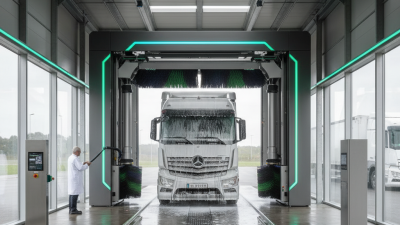
Keeping a fleet clean is more than a matter of appearance. Road salt, mud, diesel residue, and construction dust collect around frames, wheels, and undercarriages. Over time, that buildup can hide leaks, damage finishes, and make inspections harder. An Automated Truck Wash gives fleet managers a consistent way to remove these contaminants before they become expensive distractions.
Modern systems use timed brushes, high-pressure rinsing, and controlled detergent application. Some facilities also reclaim water and adjust wash cycles for different truck sizes. This process can reduce waiting time when several vehicles return together. Drivers may spend less time handling hoses, while maintenance teams gain clearer views of tires, lights, steps, and chassis components. Clean trucks work harder. The difference is measurable.
Still, automation is not a magic solution. A wash system needs suitable site planning, trained operators, regular brush inspections, and careful chemical management. Poor settings can miss wheel wells or waste water. Fleet leaders should compare wash quality, operating costs, service support, and maintenance records before choosing equipment. Firsthand trials often reveal details that brochures cannot, such as drying performance on refrigerated trailers or coverage beneath dump bodies. A practical evaluation matters. By combining professional guidance with daily inspection routines, fleets can build a safer, more predictable cleaning process. The goal is not simply brighter paint. It is dependable vehicle care that supports uptime, driver confidence, and long-term asset value.
An automated truck wash moves the vehicle through a controlled cleaning sequence. The driver positions the truck on guide rails or a conveyor. Sensors then measure its length, height, and wheel position. This prevents brushes from striking mirrors, antennas, or uneven cargo equipment.
High-pressure arches loosen road film before detergent is applied. Rotating brushes or touchless jets clean the cab, trailer sides, wheels, and lower chassis. A final rinse removes chemical residue, while blowers reduce standing water around door seams. Many systems also collect and filter used water. EPA WaterSense guidance places commercial vehicle washing near 40 gallons per vehicle, compared with up to 100 gallons for washing at home. Truck dimensions can increase consumption, so actual savings require accurate site measurement.
The control panel records wash time, chemical use, and equipment faults. Fleet managers can review these records during maintenance checks. That creates a more reliable process than relying on memory or visual guesses. The International Carwash Association has reported that professional washing can reduce water use through controlled delivery and water reclamation. Still, automation is not perfect. Thick clay may remain behind mudguards, and poorly adjusted brushes can miss roof edges. Operators should inspect difficult areas and recalibrate sensors after equipment changes. Clean trucks leave the bay faster. The details matter.
Fleet cleaning affects more than appearance. Road salt, mud, oil residue, and brake dust can settle around critical components. An automated truck wash provides a consistent cleaning routine across different vehicle sizes. It also reduces the uneven results common with rushed hand washing. Clean vehicles are easier to inspect. Small leaks, damaged lights, and loose fittings become more visible.
A well-managed wash cycle can support preventive maintenance. High-pressure water reaches wheel arches, chassis areas, and underbody surfaces that workers may overlook. Controlled detergent use helps remove greasy buildup without excessive chemical waste. Many systems also record wash times and vehicle activity. These records help fleet supervisors identify missed services and plan cleaning around maintenance schedules. Less manual scrubbing can reduce worker fatigue, especially during busy shifts.
The process is not flawless. Poor nozzle settings may leave dirt behind. Excessive pressure can damage weak seals or worn decals. Operators still need training, inspection checklists, and regular equipment servicing. A clean truck can hide mechanical problems if inspections are skipped. That is an easy mistake. Fleet managers should check water temperature, pressure, detergent concentration, and runoff handling regularly. They should also compare cleaning results on high-mileage vehicles. Practical adjustments often matter more than purchasing the most complex system. A reliable wash program combines automation with human judgment, documented checks, and realistic maintenance intervals.
Comparing automated washing with manual methods starts with consistency. An automated truck wash follows a programmed route around each vehicle. It applies water, detergent, and pressure in measured stages. This reduces missed areas around mirrors, wheel arches, and trailer panels. Fleet managers can also record wash times and water use. These records support maintenance planning and cost reviews. From practical fleet experience, predictable cleaning often matters more than impressive equipment.
Manual washing offers flexibility. A worker can focus on dried mud, grease marks, or delicate fittings. That attention is valuable after construction work or winter road treatment. However, results may vary between employees and busy shifts. A rushed wash can leave grime behind. It can also take longer than expected. Labor scheduling becomes difficult when several trucks return together.
Automated systems usually improve turnaround time for repeated fleet washing. Vehicles move through a defined process, while staff handle preparation and final checks. The difference is visible. Still, automation is not perfect. Poor brush contact, blocked nozzles, or incorrect settings can reduce cleaning quality. Manual inspection remains necessary, especially near steps, seals, and underbody components. A sensible comparison should include water consumption, labor hours, wash frequency, vehicle size, and cleaning standards. Cheap equipment may become expensive when repairs interrupt daily operations. That is an uncomfortable detail, but it deserves attention.
Why Choose an Automated Truck Wash for Your Fleet?
Factors to Evaluate Before Choosing a System
An automated truck wash can turn a slow, inconsistent task into a measured fleet process. However, the system deserves careful evaluation before installation. Start with the site. Measure bay length, vehicle height, turning space, drainage, and daily wash volume. A system designed for delivery vans may struggle with taller trucks or uneven body shapes. Review its cleaning performance on mud, salt, grease, and winter road film.
Throughput matters, but rushed washing can leave mirrors, wheel areas, or rear doors dirty. Ask for verified cycle times under real operating conditions. Check water recycling capacity, detergent controls, noise levels, and energy use. Reliable sensors should detect vehicle position without frequent false stops. Operators also need clear controls, emergency shutoffs, and practical access for inspections.
Maintenance often decides whether automation remains useful after installation. Request service schedules, replacement-part availability, training details, and written performance records. A short on-site trial can reveal problems that brochures hide. Watch how the brushes contact different vehicle surfaces. Listen for unusual vibration. Staff feedback matters too, although it may expose habits the system cannot fix. Budget for drainage work, installation delays, and unexpected repairs. The cheapest purchase can become expensive when downtime interrupts dispatch schedules.
| Evaluation Factor | What to Measure | Typical Planning Benchmark | Why It Matters for Fleet Operations | Questions to Ask Before Purchase |
|---|---|---|---|---|
| Wash Throughput | Vehicles washed per hour, average cycle time, and queue capacity. | Many automated systems are designed for approximately 8–20 trucks per hour, depending on vehicle size, wash program, and site layout. | Higher throughput can reduce driver waiting time and help prevent wash-bay congestion during shift changes. | Can the system handle the fleet’s peak arrival pattern rather than only its daily average? |
| Vehicle Compatibility | Clearance height, lane width, wheelbase range, mirror position, trailer length, and vehicle attachments. | Confirm dimensions against the largest and smallest vehicles in the fleet; heavy-duty vehicles commonly require clearances of more than 4 metres. | A system that cannot safely accommodate mixed vehicle types may create manual workarounds or exclude part of the fleet. | Can rigid trucks, tractor-trailers, tankers, buses, and vehicles with roof equipment use the same wash process? |
| Water Consumption | Fresh water used per wash, reclaim-water percentage, rinse-water demand, and water quality requirements. | Water use varies substantially by equipment and program; systems with water reclamation can reduce fresh-water demand compared with once-through washing. | Lower fresh-water consumption can reduce utility costs and support sites operating under water restrictions. | What is the measured fresh-water use per vehicle, and how does performance change when reclaimed water is used? |
| Wastewater Management | Drainage capacity, oil and sediment separation, reclaim-tank capacity, discharge limits, and sludge-removal frequency. | The site should be engineered for peak wash flow and comply with applicable local sewer, stormwater, and wastewater requirements. | Insufficient drainage or treatment capacity can cause downtime, environmental risk, and regulatory problems. | What permits, pretreatment equipment, inspections, and waste-disposal procedures are required? |
| Labor Requirement | Operators required per shift, loading and unloading tasks, chemical handling, and daily cleaning duties. | Automation can reduce the number of employees directly involved in each wash, but most facilities still require trained staff for vehicle positioning, inspections, and maintenance. | Labor savings depend on the complete workflow, not only on the number of brushes or spray arches. | What tasks remain manual, and what level of training is required for safe operation? |
| Cleaning Performance | Coverage of cab, trailer, chassis, wheels, mirrors, rear surfaces, and areas affected by road salt or mud. | Performance should be validated using the fleet’s actual soil conditions, including dried mud, salt residue, grease, and winter grime. | A fast cycle has limited value if critical areas require repeated manual scrubbing. | Can the supplier perform a representative demonstration using comparable vehicles and soil conditions? |
| Chemical Efficiency | Detergent concentration, dosing accuracy, chemical cost per wash, and compatibility with paint, decals, seals, and metals. | Automatic dosing should be calibrated to water hardness, soil load, temperature, and the selected wash program rather than using a fixed maximum dose. | Correct dosing helps control operating cost while reducing residue, surface damage, and unnecessary wastewater loading. | Are chemical controls metered automatically, and can usage be tracked by vehicle or wash cycle? |
| Safety Controls | Emergency stops, vehicle-position sensors, obstruction detection, interlocks, guarded moving parts, and operator visibility. | The system should include documented safety procedures, accessible emergency stops, and risk controls appropriate to the site’s vehicle and pedestrian traffic. | Large vehicles and moving equipment create significant risks if positioning, access control, or shutdown procedures are inadequate. | How are faults recorded, how quickly can the equipment be stopped, and what safety training is provided? |
| Reliability and Uptime | Expected operating hours, failure history, critical spare parts, preventive-maintenance intervals, and service response time. | Evaluate uptime using documented service records and a written maintenance schedule; do not rely solely on an advertised availability figure. | Unexpected downtime can force vehicles to external wash sites, increase travel time, and disrupt dispatch schedules. | Which components most commonly fail, and what is the guaranteed response time for critical breakdowns? |
| Maintenance Access | Access to pumps, brushes, nozzles, sensors, filters, tanks, belts, and control panels. | Routine inspection and cleaning points should be reachable without unnecessary dismantling or extended equipment shutdown. | Simple maintenance access lowers service time and makes it more likely that daily inspections are completed consistently. | Which maintenance tasks can in-house technicians perform, and which require specialist service? |
| Total Cost of Ownership | Purchase price, construction, installation, utilities, chemicals, labor, maintenance, parts, wastewater, and financing. | Compare costs over a multi-year ownership period instead of evaluating equipment price alone. | A lower initial price may result in higher long-term costs if water, energy, labor, or maintenance demands are greater. | Can the supplier provide a transparent cost model based on the fleet’s annual wash volume? |
| Energy Demand | Electrical load, pump power, heating requirements, standby consumption, and compressed-air demand. | Energy use depends on pump size, water pressure, drying equipment, water heating, and climate; obtain measured consumption for the intended wash program. | Energy demand affects operating cost and may determine whether existing electrical or gas infrastructure is sufficient. | What are the peak electrical loads, and will site upgrades be required before installation? |
| Site and Climate Requirements | Indoor or outdoor installation, freezing conditions, ventilation, floor slope, drainage, water supply, and traffic flow. | Cold-weather sites may require insulated piping, heat tracing, heated enclosures, or procedures for draining exposed components. | Poor site planning can limit operating hours, create ice hazards, and increase installation costs. | What minimum temperatures are supported, and how is the system protected during freezing weather? |
| Data and Fleet Integration | Wash counts, vehicle identification, cycle selection, chemical usage, water consumption, fault alerts, and maintenance records. | Useful systems should provide exportable operating data and clear alerts for faults, consumables, and scheduled maintenance. | Reliable data helps managers verify wash compliance, identify recurring faults, and calculate cost per vehicle. | Can the system connect with existing fleet, access-control, or maintenance software? |
| Return on Investment | Avoided external wash fees, labor savings, reduced travel, increased vehicle availability, utility costs, and capital recovery period. | Calculate using actual annual wash volume, current outsourcing cost, internal operating cost, and realistic downtime assumptions. | The financial case depends heavily on utilization; a high-capacity system may not be economical for a low-volume fleet. | What wash volume is required to achieve the target payback, and how sensitive is the result to lower utilization? |

A successful automated wash program begins with a practical fleet audit. Record vehicle sizes, daily routes, soil types, and cleaning frequency. A refuse truck may need stronger treatment than a regional delivery vehicle. Do not assume one cycle fits every unit.
Choose a wash location that supports safe entry, drainage, water recovery, and steady vehicle flow. Measure turning space carefully. A small layout mistake can create long queues. Begin with a pilot group of five to ten vehicles. Track wash time, water use, missed areas, and driver feedback for four weeks.
Train operators before expanding the system. They should check mirrors, loose parts, doors, and roof equipment before each cycle. Use simple inspection sheets with vehicle numbers and timestamps. Maintenance teams also need clear schedules for brushes, sensors, pumps, and emergency stops. Small failures become expensive delays.
Review the data every month. Compare cleaning quality with labor hours and operating costs. Keep a manual touch-up process for unusual loads or heavily soiled units. That is not a weakness. It shows the system has limits. Fleet managers should adjust wash settings gradually, because faster cycles may leave film around wheel arches or beneath chassis rails. Reliable results come from regular testing, staff involvement, and honest corrections.